1. Introduction: The Ruby of the Ceramic World
In the high-stakes field of advanced materials, where performance is gauged in microns and milliseconds, one substance stands as a testament to human resourcefulness and the power of chemistry. Silicon Carbide Ceramics are not simply parts; they are the quiet guardians of contemporary civilization. Birthed from the combination of silicon and carbon, this material possesses a paradoxical nature that resists the limitations of traditional porcelains. It is more challenging than virtually any type of substance in the world, yet it performs heat like a steel. It is breakable in its raw type, yet engineered to stand up to the crushing forces of commercial turbines. For decades, these porcelains have actually been the invisible armor securing the equipment that powers our cities, thrusts our lorries, and cleanses our air. This is the story of how a simple chemical reaction advanced right into a technological marvel, reshaping industries from the tiny degree of semiconductors to the substantial scale of ballistics. We are not simply telling the story of a product; we are chronicling the advancement of durability itself.
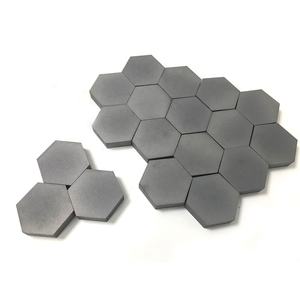
(Silicon Carbide Ceramics)
2. Brand Beginning: The Spark of Technology
The trip of Silicon Carbide Ceramics begins not in an immaculate laboratory, yet in the fiery ambition of the late 19th century. Our brand name ethos is rooted in the serendipitous discovery of this material, a tale that mirrors our own unrelenting search of the difficult. The pursuit began with a need to synthesize diamonds, the supreme symbol of firmness. While the sorcerers of sector did not discover the gems they looked for, they came across something much more functional. In 1891, Edward Goodrich Acheson found Carborundum, a product that was almost as tough as ruby but possessed distinct homes that made it essential for market. This unintended birth is the cornerstone of our philosophy. Our team believe that real advancement often arises from the unanticipated, and our brand was started on the concept of harnessing these unforeseen residential properties to address the world’s most difficult engineering obstacles.
From Grit to Magnificence. The very early history of our product was specified by abrasion. For the very first fifty percent of the 20th century, Silicon Carb. ide was valued primarily for its ability to erode other materials. It was the scouring pad of industry, essential yet unglamorous. Nonetheless, our founders saw a much deeper possibility in the crystal lattice. They recognized that a product with the ability of abrading steel could likewise be engineered to withstand it. This insight stimulated a revolution in materials scientific research. We moved our focus from just eliminating material to shielding it. The shift from unpleasant grit to architectural ceramic was a zero hour in our brand’s background, marking our development from a provider of raw materials to a maker of crafted services.
The Cold Battle Catalyst. Real acceleration of our brand name’s development happened during the room race and the Cold Battle. As mankind grabbed the stars and nations stocked missiles, the demand for products that might hold up against severe warmth and radiation ended up being vital. Silicon Carbide became a hero product. Its ability to keep architectural stability at temperature levels exceeding 1600 ° C made it the ideal prospect for rocket nozzles and heat shields. This era built our identification. We learned that our ceramics were not practically resilience; they had to do with enabling mankind to check out the unidentified and protect the known. The high-stakes setting of the Cold War instructed us the worth of absolute reliability, a lesson that stays etched right into our business DNA.
3. Core Process: The Alchemy of Sintering
Changing the raw powder of Silicon Carbide right into a dense, high-performance ceramic is an intricate art form that calls for outright proficiency of heat, stress, and chemistry. Our brand name distinguishes itself with our proprietary command of three distinctive sintering technologies. Each technique is a thoroughly secured trick, a dish that permits us to customize the microstructure of the ceramic to satisfy the specific demands of our clients. This is not mass production; it is precision engineering at the atomic level.
4. Solid State Sintering. This is the purest expression of our craft. Solid State Sintering is a procedure that counts on the diffusion of atoms throughout grain boundaries to fuse the Silicon Carbide fragments with each other. We mix the raw powder with minute amounts of boron and carbon, after that subject it to temperatures surpassing 2000 ° C in an inert environment. The absence of a liquid phase throughout this process guarantees that the end product is of the highest pureness. There are no secondary phases to damage the structure or react with destructive chemicals. This process creates a ceramic that is the standard for applications where chemical inertness is non-negotiable. Our Strong State Sintered ceramics are the guardians of the chemical industry, shielding pumps and valves from the most hostile acids and antacids. They are the gold requirement for wear resistance, supplying a lifespan that is determined not in months, yet in decades.
5. Fluid Phase Sintering. When the application demands complex geometries and high fracture sturdiness, we transform to Liquid Phase Sintering. This process includes the intro of sintering help, such as alumina and yttria, which create a transient fluid stage at heats. This liquid acts as a lubricating substance, allowing the Silicon Carbide particles to reposition themselves into a denser packaging arrangement. The result is a ceramic that is fully thick and possesses a microstructure that is immune to splitting. This method allows us to create components with detailed shapes that would certainly be impossible to attain with solid state sintering. Liquid Stage Sintered ceramics are the workhorses of the mining and mineral handling markets. They are discovered in cyclone linings, nozzles, and slurry pumps, where they sustain the ruthless barrage of abrasive slurries. This procedure represents our ability to balance intricacy with toughness, developing parts that are both solid and flexible.
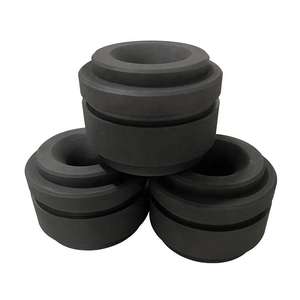
( Silicon Carbide Ceramics)
6. Response Adhered Silicon Carbide. For applications that require absolutely no porosity and the highest possible stiffness, we utilize the distinct procedure of Response Bonding. This is a two-step alchemy. Initially, we develop a permeable preform from a combination of Silicon Carbide and carbon. Then, we penetrate this preform with liquified silicon. The silicon reacts with the carbon, developing new Silicon Carbide in situ, which binds the original fragments together. The unreacted silicon loads the staying pores, producing a composite that is fully dense and impenetrable. This procedure results in a product that is extremely hard and has a high Young’s modulus. Response Bound Silicon Carbide is the material of choice for high-precision optical mirrors and parts that have to be entirely nonporous to gases and fluids. It represents the peak of our design capacities, allowing us to develop components that are both light-weight and exceptionally solid.
7. Global Effect: The Invisible Infrastructure
The impact of our Silicon Carbide Ceramics expands far beyond the factory floor. It is woven into the material of international framework, silently supporting the systems that maintain our world running smoothly. From the midsts of the planet to the side of area, our materials are the unrecognized heroes of modern-day life. We measure our success not in sales numbers, yet in the countless gallons of clean water processed, the billions of miles driven safely, and the numerous lives secured.
Energy and Setting. In the oil and gas industry, equipment goes through several of the toughest problems conceivable. Boring mud, sand, and corrosive chemicals combine to damage standard metal elements in a matter of weeks. Our Silicon Carbide ceramics are the option to this problem. Used in pump seals, bearings, and shutoff components, our porcelains last ten times longer than tungsten carbide. This decreases downtime, protects against ecological calamities brought on by leaks, and saves the industry billions of dollars each year. Additionally, in the nuclear power industry, our porcelains act as vital components in gas pellets and cladding. Their ability to hold up against high radiation dosages and extreme temperature levels makes them necessary for the risk-free operation of nuclear reactors, offering a barrier which contains contaminated material and shields the setting.
Transport and Electrification. The vehicle market is undergoing a seismic change in the direction of electrification, and Silicon Carbide goes to the heart of this makeover. While the world concentrates on Silicon Carbide semiconductors for power electronic devices, our architectural porcelains play a vital function in the physical elements of electrical automobiles. We give high-performance brake discs and clutches that provide superior stopping power and wear resistance. Furthermore, our porcelains are utilized in the production of diesel particulate filters, which catch residue and reduce exhausts from durable trucks. As the world relocates in the direction of a greener future, our materials are helping to clean the air and decrease the carbon footprint of transport. In the realm of high-speed rail, our porcelains are used in birthing parts that minimize friction and increase effectiveness, permitting trains to travel faster and quieter than ever before.
Defense and Room. Possibly one of the most noticeable impact of our technology is in the world of protection and aerospace. In the armed forces, Silicon Carbide is the product of selection for ballistic armor. It is among minority products capable of stopping high-velocity projectiles while staying light adequate to be put on by a soldier. Our shield plates supply life-saving protection for army workers and law enforcement officers all over the world. In the aerospace market, our ceramics are used in the leading sides of hypersonic cars and re-entry shields. They should endure the hot warm of climatic reentry, where temperature levels can surpass 2000 ° C. We are the shield that safeguards humankind’s explorers as they press the boundaries of speed and elevation, venturing into the vacuum cleaner of room and returning safely to planet.
8. Future Vision: Beyond the Horizon
As we aim to the future, our vision for Silicon Carbide Ceramics is one of convergence. We see a world where the line between structural products and digital elements obscures. The very same crystal lattice that provides our porcelains their mechanical toughness additionally provides premium digital properties. We are on the cusp of a new age where our materials will certainly not simply support technology, but proactively participate in it.
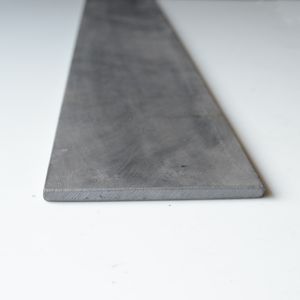
( Silicon Carbide Ceramics)
Assimilation with Semiconductors. The surge of Silicon Carbide as a third-generation semiconductor is a trend we are welcoming wholeheartedly. While our structural ceramics have been protecting machinery for years, we now see a future where these 2 globes clash. We are creating crossbreed elements that integrate the thermal conductivity of our ceramics with the electronic homes of SiC wafers. Envision a heat sink that is not simply a passive cooler, however an energetic component of the circuitry. This combination will certainly transform power electronic devices, allowing for smaller, a lot more efficient devices that can run at greater temperatures and voltages. Our vision is to be the product provider for the next generation of electric grids, electric cars, and renewable energy systems.
Quantum Materials. Past classical electronic devices, Silicon Carbide is emerging as a celebrity gamer in the quantum revolution. Recent study has revealed that problems in the SiC crystal latticework, called shade facilities, can function as qubits, the building blocks of quantum computers. Our research department is concentrated on producing ultra-high pureness Silicon Carbide crystals with controlled issue thickness. We aim to offer the product foundation for the quantum internet, where info is transferred securely over cross countries making use of the concepts of quantum entanglement. This is the frontier of our brand’s future, a location where we are not simply constructing products, yet developing the future of computing and interaction.
Lasting Production. Our vision for the future is also specified by our dedication to the earth. We are committed to creating sintering processes that are a lot more energy reliable and make use of recycled materials. By closing the loop on material usage, we ensure that the armor of the future does not come with the expense of the environment. We are purchasing green modern technologies that reduce our carbon footprint and minimize waste. Our goal is to be a carbon-neutral maker, showing that industrial toughness and ecological duty can exist side-by-side. Our team believe that the future comes from business that can innovate without depleting the planet’s resources, and we are leading the cost in lasting ceramics manufacturing.
TRUNNANO CEO Roger Luo said:”Silicon Carbide is the physical symptom of strength. Our mission is to guarantee that when the world pushes its limits, our innovation is there to hold the line.”
9. Distributor
Tanki New Materials Co.Ltd. focus on the research and development, production and sales of ceramic products, serving the electronics, ceramics, chemical and other industries. Since its establishment in 2015, the company has been committed to providing customers with the best products and services, and has become a leader in the industry through continuous technological innovation and strict quality management.
Our products includes but not limited to Aerogel, Aluminum Nitride, Aluminum Oxide, Boron Carbide, Boron Nitride, Ceramic Crucible, Ceramic Fiber, Quartz Product, Refractory Material, Silicon Carbide, Silicon Nitride, ect. If you are interested in hbn boron nitride ceramics, please feel free to contact us.
Tags: Silicon Carbide Ceramics, Silicon Carbide Ceramic, Silicon Carbide
All articles and pictures are from the Internet. If there are any copyright issues, please contact us in time to delete.
Inquiry us